Showing posts with label New Mexico Action Corps. Show all posts

Monday, December 17, 2012

New Mexico Action Corps Says NO to Cutting Foreign Aid


The New Mexico Action Corps has just completed lobby visits with Senator Udall and Senator Bingaman of New Mexico! Over the last month, Action Corps members have all participated in lobby visits to their Congressional Senators and Representatives, urging them to reconsider cutting the already small foreign aid budget. Together, the Action Corps has delivered over 13,000 signatures! Wow!  To see more of what's going on with the New Mexico Action Corps, click here to read their blog, or here to follow them on Facebook.  

Stay tuned for more photos and stories from lobby visits across the country!

-  -  -

By Kalen Olson, New Mexico Action Corps


The days are winding down as Congress members exit office and we usher in new political leaders.

Yes, it’s the lame-duck session. “Lame-duck” originally referred to bankrupt businessmen in Britain who were considered “lame” because their position rendered them as vulnerable as injured birds. Now, the term describes Congress members who are on their way out of office. That’s why the lame-duck session is an important time to make advances in policy. Senators and Representatives aren’t up for reelection, so why not try and push policy they may have been hesitant on before?

Oxfam America has a clear agenda this lame-duck session: no more cuts to foreign aid. Voters lobbied on Capitol Hill, wrote letters to Congress, and signed petitions to illustrate why foreign aid is important to thousands of people around the country.

With just under 1% of the Federal budget going toward foreign aid, it seems reasonable that Congress would approve this request. Not only has foreign aid helped eradicate polio, but, according to Gregory Adams, Director of Aid Effectiveness for Oxfam America, it has also fueled the Green Revolution and rebuilt shattered economies. In the process, we’ve strengthened alliances with Turkey, South Korea, and Poland.

Perceived and Actual Foreign Aid Spending

Further cuts to life-saving programs would represent a step backwards, and mean the difference between life and death for many of the world’s poor. Since it’s a small investment with a large return, Congress would have to be quackers to cut aid.


Community members of New Mexico petitioned, wrote letters, and visited Senators Bingaman and Udall. Co-organizer Jasmine McBeath and I stopped by Senator Bingaman and Udall’s office with foreign aid info in hand.

What I’d pictured about lobbying was quite different from what actually took place. The illusion of corporate deals transpiring behind closed doors was shattered when we met with staff members. Sharing why investment in foreign aid is necessary allowed crucial information to get into the hands of decision makers.


Tuesday, November 13, 2012

Community dinner creates lasting impressions

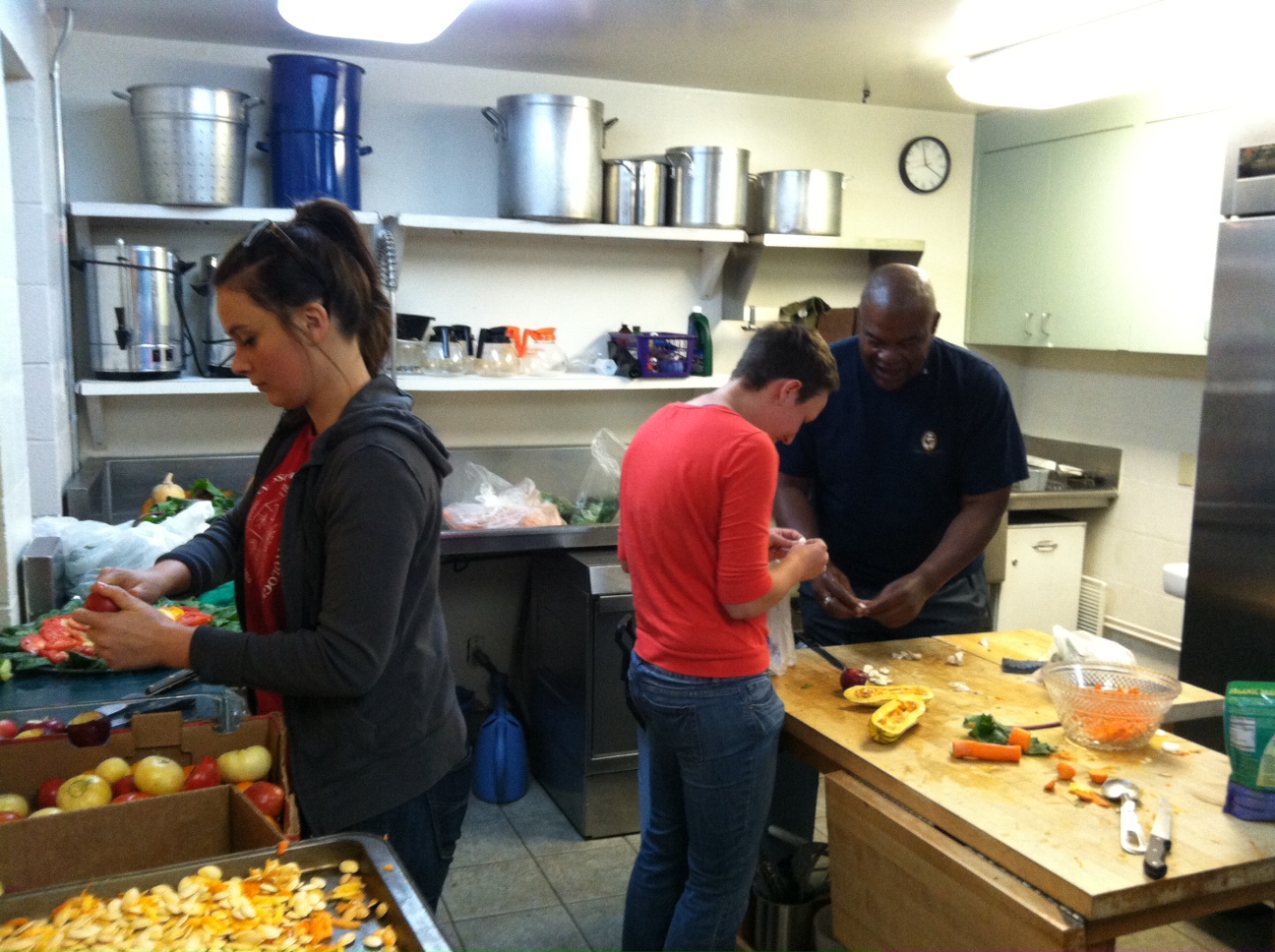
The New Mexico Action Corps partnered with several local farmers to use their left overs to host a community dinner in honor of World Food Day.  Joined by Oxfam constituents partner organizations and local food enthusiasts, this GROW friendly event brought people together over principles such as reducing waste, eating less meat, and cooking smart.  For more photos and information about the New Mexico Action Corps click here.

-  -   -

By Jasmine McBeath


The time to vote has come and gone, right? Not true, according to Foodology star Greg Gould, who claims we vote three times a day, probably more. That’s because you’re making an economic, political, and social justice choice every time you raise a fork to your mouth. 

For instance, if Americans in urban areas bought two fair trade chocolate bars a month, it could benefit 30,000 small-scale farmers. Or, if we were to join families in the Philippines, India, Brazil, Spain, and the UK in cooking more efficiently, the benefit would be the same as planting 540 million trees and letting them grow for 10 years. 


My favorite part about this worldwide GROW movement is that it’s not overwhelming. The idea is to think global, act local. It’s not hard to save food, cook smart, or eat a little less meat. It’s also reasonable to expect us to eat seasonally and support small-scale farmers.

Oxfam’s been talking a lot about the GROW Method this fall, so we decided to practice what we preach in a big way. Two weekends ago, we celebrated our first World Food Day Community Dinner. We partnered with six different nonprofits, received donations from a dozen farms, and put twenty volunteers to work in shifts from 10am to 10pm. Everyone came away saying how wonderful the food tasted and with a greater understanding of how eating locally can make a global impact


I was lucky enough to see it through from beginning to end. The day started with picking up produce at the Downtown Growers Market. Our community chef Kathy met me there and we visited each booth from 11am-1pm requesting leftovers. The farmers were incredibly generous and helpful, offering what they didn’t think other growers would have and making sure we came out with what we needed to pull off the meal. We left with watermelons wedged below the seats, baguettes leaned against the doors, and greens draped across the seats. Boxes of cauliflower, squash, and tomatoes called shotgun, paper bags full of potatoes and apples filled the truck, and mini pumpkins spilled out the back.


I have to admit it was a little overwhelming when we laid all the food out on the counter in the church. Then something magical happened. Our community chef Kathy transformed into a contestant on one of those cooking show competitions. Challenge: make food for 100 people using the ingredients in the kitchen with only 6 helpers in under 5 hours. But unlike the people on those shows, everyone seemed to maintain their composition. Every time I glanced over, I saw people hard at work, but smiling.


And then, suddenly, it was dinnertime. Volunteers set out frothy watermelon juice in a glass punch bowl next to pitchers of sun tea. The produce from the counter (plus the donation from the Co-opt) became spicy pumpkin soup, chicken stew, bruschetta, shepherd’s pie, beans with tortillas, squash and greens, green chile bread, baguettes, and half a dozen different salads. The dessert table screamed fall with its peach squares, apple brown betties, dark chocolate covered apple slices and pumpkin pudding.


As I walked around, I heard great things about the food, and was happy to see people using the food icebreaker questions. There’s nothing like food to get strangers talking. 


When it came time to pledge GROW, some people said they will try Meatless Mondays, others vowed to chop vegetables and meat into smaller pieces for shorter cook times, and still others promised to buy CSAs and shop at the farmers market. Keynote speaker Greg Gould shared insight into fixing the food system by improving our personal quality of life and health. I liked how Greg acknowledged that each person is an expert as far as their own personal food preferences. We already know what we like to eat, now we just have to think about the best way to go about it. Greg’s talk tied in family food traditions, teaching children to cook, and what we can learn from planting trees. He’s a very engaging speaker, so I recommend hearing his speech, recorded by Peter Gallo at Kimchi Farms.  


At the end of the night the cleaning crew came to the rescue. Right in line with the GROW Method, we didn’t have to throw anything away. With hoards of hungry guests, there weren’t many leftovers. Anything extra was split between volunteers while the kitchen scraps went to the pigs at Kimchi Farms.

I really couldn't have wished for a better event!


THANK YOU!

Donors
Bosque Baking Company
Brown's Family Farm
Clay Trafton Farm
Frost Hill Organics
Granja Para Mañana
Harvest Gifts
La Montanita Co-opt
La Quiche
Macias Farm
Magos Farm
Majestic Valley Farm
Moore Family Farm
St. Thomas of Canterbury Church

Collaborators
Amnesty International
Bread for the World
Community Bricolage
Food Corps
Foodology
Nourish International
Oxfam Action Corps

Community Chef
Kathy Chavez

Guest Speaker
Greg Gould

Photographer
Rene Ronquillo

Wednesday, September 26, 2012

Home Farming on a Balcony

by Jasmine McBeath of the New Mexico Action Corps


Secret Garden. Senior Garden. Gardenshare. Waffle Planting. Plantscape. Food Forest. Hanging Garden. Hoop House. Mini-farm.Earth Therapy.

There appears to be wide range of names for a home farm. I hadn't heard of the idea until I looked into planting vegetables on our patio. I was following the GROW Methodby buying locally and seasonally when I thought, what could be more local than my backyard? That's when I stumbled upon the Home Farms 2012 project. The goal is to get 2,012 home farms registered to celebrate the New Mexico Centennial. According to the project website, a home farm is “any place a person grows some of their own food, inside or out.” It’s a great way to save natural resources since there’s no shipping, and you know your food is fresh and in season.

Everyone is invited to register, from relatively large farms which offer CSAs to backyard potted herb growers. Reading the descriptions of people’s home farms revealed a great deal of diversity even in backyard plots. We planted in plastic tubs on our apartment balcony, while others’ maintain sprawling yards that yield enough fruit and vegetables to feed the neighbors. With ten beds, a hoop house and the beginnings of an orchard, one family listed their home produce as asparagus, lettuce, peas, tomatoes, potatoes, herbs, raspberries, apples, pears, fig and pomegranate. 
Another man gained the nickname, “The Farmer” for growing more than 25 varieties in his front yard, including okra, apricots, rhubarb,and tomatillos.


I smiled at the community garden called, “The Plot Thickens” and was blown away by the family that sold their second car and turned their driveway into a garden. Other inspirational stories includeMandy’s Special Farm, a long-term residence for women with autism and Shabeta’s Healing Garden that teaches intensive classes ranging from workshops to year-long courses. The City of Albuquerque Open Space Traditions Garden relies on methods from the early Pueblans and Spanish to conserve water and cultivate native seeds. There’s definitely something to learn from their water conservation techniques including using, “ollas to wick water slowly, waffle gardens to contain spread of and prevent waste of water, and cobblestone mulches which moderate soil temperature as well as prevent evaporation of soil moisture.”

I read story after story of people, from kindergarteners to senior citizens, growing to help themselves and others. And I signed on. As of last weekend, I'm a home farmer. I visited Rehm's Nursery and learned what grows well in the fall. Luckily, the workers there were helpful, since I'm new to this. If we don't count a high school science experiment on green onions in salt versus sugar conditions, it's my first time growing vegetables. Keep your fingers crossed for us!
P.S. In case you want to plant now too, consider these cool-weather veggies: kale, lettuce, spinach, chard, kohlrabi, mustard greens, collard greens, cabbage, broccoli, cauliflower, radishes, beets, carrots, snow peas, spearmint and cilantro.


Yum! When's dinnertime?


Wednesday, September 5, 2012

MY PLEDGE: MEATLESS MONDAYS

Jasmine McBeath from the New Mexico Action Corps has made a promise to cut down on her meat intake for Meatless Mondays! Take a look at her post below to see why Jasmine decided to go meatless on Monday - and you won't believe what a difference it can make!

To see what else is up in New Mexico, check out their blog: http://newmexico.oxfamactioncorps.org

What have you done to implement the GROW Method? Have you tried meatless Mondays? Have any vegetarian specialties to share? Let us know at actioncorps@oxfamamerica.org!


I have to admit that I only recently considered the changes I could make to my diet that would affect others. Although I grew up in a conscientious, environment-oriented family, we were more concerned with saving water than food. In fact, my boyfriend still refers to me as "The Water Nazi" for turning off the facet while he's midway through brushing his teeth or shaving.

But when I read about "Meatless Mondays", something stuck. I had learned about Oxfam's GROW Campaign from my training, and this plan provided a simple, concrete way to support the "eat less meat" objective. 

The phrase has been around for almost 100 years (originally a WWI slogan to ration food), but I didn’t know about “Meatless Mondays” until a recent backlash from ranchers about the content of a USDA newsletter. This flurry of articles made me dig a little deeper, and realize that the campaign has reached a lot of people. According to a report by the American Meat Institute, nearly 20% of households participate. 

Chefs are on board; schools, hospitals, and even whole towns have implemented meat-free Mondays. 80,000 children attending Baltimore City Public Schools made the switch. University of California Santa Cruz and Carnegie Mellon students enjoy Meatless Mondays at their dining halls. The Cobblestone Café at John Hopkins Hospital offers only vegetarian options on Mondays. Bigger still, San Francisco and Washington D.C. have passed city-wide resolutions. And in 2011, Aspen became the first “Meatless Monday Community” with over 30 restaurants and organizations participating.

If you're like many of my friends, you're probably asking, "What difference does it make?" The answer is: a lot.  A family of four that trades in their steak dinner for lentils once a week saves 12.5 Olympic-size swimming pools of water per year. Moreover,“if everybody in America did that, that would be the equivalent of taking 20 million midsize sedans off the road,” food advocate Michael Pollan commented on Oprah. Water, land, fertilizer, oil. These are all things we don’t often consider when eating meat. Maybe you knew that livestock farming accounts for almost 20% of greenhouse gases, but did you know it also represents 8% of water use worldwide?

                   
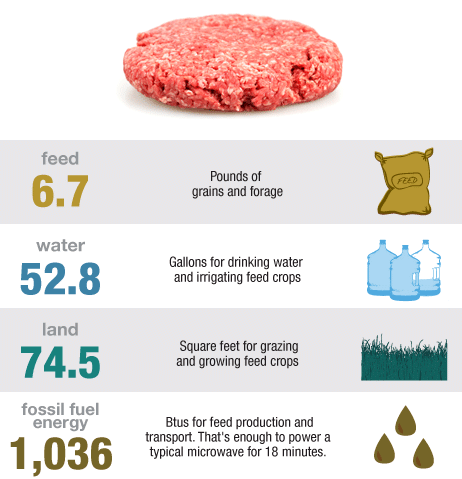
 What it Takes to Make a Quarter-Pounder
Source: J.L. Capper, Journal of Animal Science, December, 2011.
Credit: Producers: Eliza Barclay, Jessica Stoller-Conrad 
Designer: Kevin Uhrmacher/NPR

The drain on resources gives rise to other problems. According to Oxfam press officer Ben Grossman-Cohen, "If we don't reduce our environmental footprints as we increase production, poor people, particularly women, will be the first to suffer. Eating less meat is a simple way to reduce the pressure on global resources and help ensure that everyone has enough to eat." Oxfam's GROW campaign goes a long way toward feeding a world population estimated to grow to nine billion by 2050. 

Now, I realize there are many people that go way beyond the once-a-week pledge. There are vegans and vegetarians, and others like a former roommate of mine that ate veggie burgers every other day just because they were simple to prepare and tasted good. However, we all do what we can, and that means "Meatless Mondays” for me. This plan assures I eat less meat by making it a priority at least once a week. I've conned my boyfriend into joining in also. As a big meat-eater, it’s a significant sacrifice for him, but I’m confident I can cook up some great vegetarian meals. I’ll keep you updated on how it’s going, and post some fun recipes so you can join in too.

By Jasmine McBeath