Showing posts with label Eat local. Show all posts

Tuesday, November 13, 2012

Community dinner creates lasting impressions

The New Mexico Action Corps partnered with several local farmers to use their left overs to host a community dinner in honor of World Food Day.  Joined by Oxfam constituents partner organizations and local food enthusiasts, this GROW friendly event brought people together over principles such as reducing waste, eating less meat, and cooking smart.  For more photos and information about the New Mexico Action Corps click here.

-  -   -

By Jasmine McBeath


The time to vote has come and gone, right? Not true, according to Foodology star Greg Gould, who claims we vote three times a day, probably more. That’s because you’re making an economic, political, and social justice choice every time you raise a fork to your mouth. 

For instance, if Americans in urban areas bought two fair trade chocolate bars a month, it could benefit 30,000 small-scale farmers. Or, if we were to join families in the Philippines, India, Brazil, Spain, and the UK in cooking more efficiently, the benefit would be the same as planting 540 million trees and letting them grow for 10 years. 


My favorite part about this worldwide GROW movement is that it’s not overwhelming. The idea is to think global, act local. It’s not hard to save food, cook smart, or eat a little less meat. It’s also reasonable to expect us to eat seasonally and support small-scale farmers.

Oxfam’s been talking a lot about the GROW Method this fall, so we decided to practice what we preach in a big way. Two weekends ago, we celebrated our first World Food Day Community Dinner. We partnered with six different nonprofits, received donations from a dozen farms, and put twenty volunteers to work in shifts from 10am to 10pm. Everyone came away saying how wonderful the food tasted and with a greater understanding of how eating locally can make a global impact


I was lucky enough to see it through from beginning to end. The day started with picking up produce at the Downtown Growers Market. Our community chef Kathy met me there and we visited each booth from 11am-1pm requesting leftovers. The farmers were incredibly generous and helpful, offering what they didn’t think other growers would have and making sure we came out with what we needed to pull off the meal. We left with watermelons wedged below the seats, baguettes leaned against the doors, and greens draped across the seats. Boxes of cauliflower, squash, and tomatoes called shotgun, paper bags full of potatoes and apples filled the truck, and mini pumpkins spilled out the back.


I have to admit it was a little overwhelming when we laid all the food out on the counter in the church. Then something magical happened. Our community chef Kathy transformed into a contestant on one of those cooking show competitions. Challenge: make food for 100 people using the ingredients in the kitchen with only 6 helpers in under 5 hours. But unlike the people on those shows, everyone seemed to maintain their composition. Every time I glanced over, I saw people hard at work, but smiling.
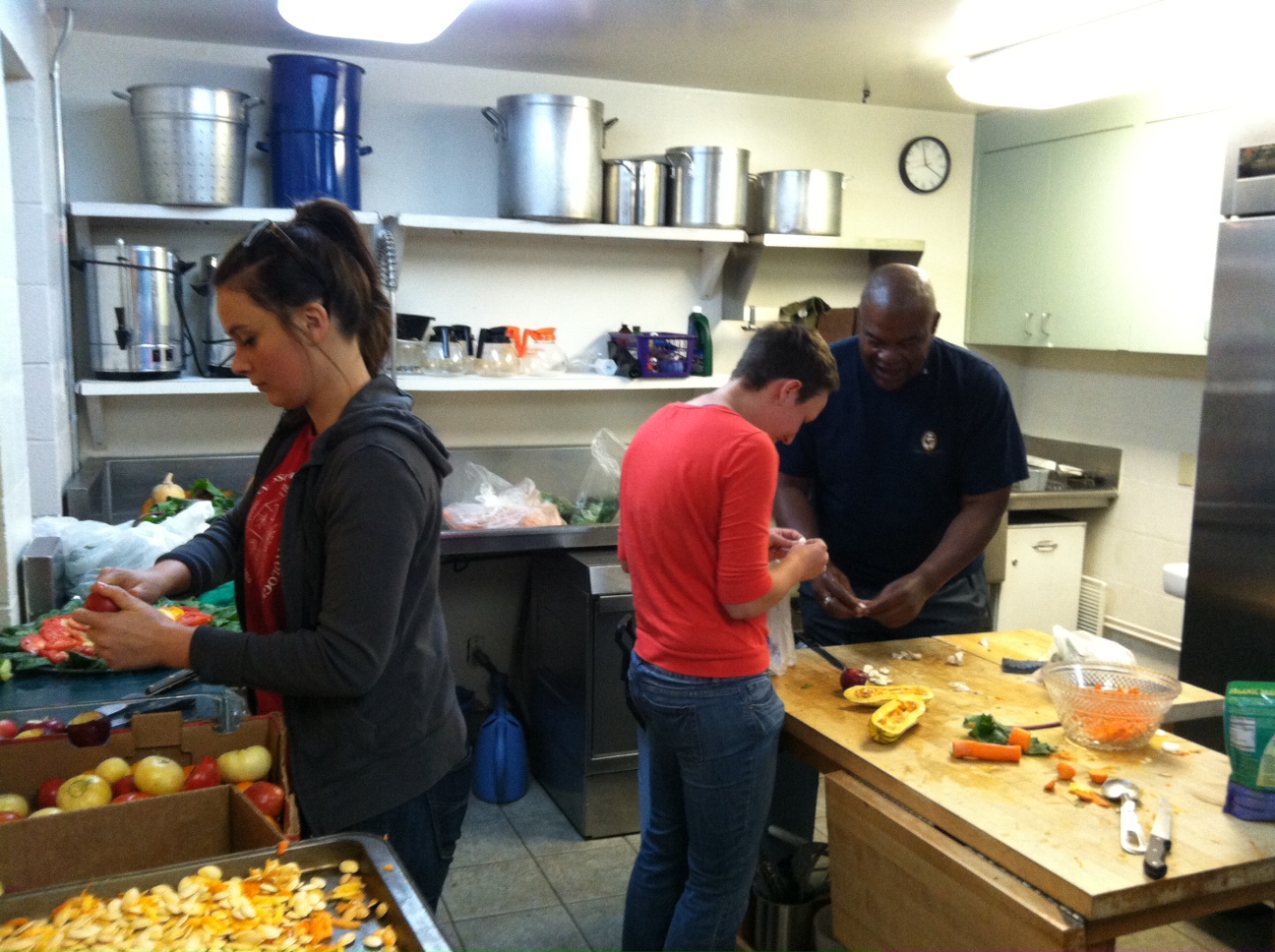

And then, suddenly, it was dinnertime. Volunteers set out frothy watermelon juice in a glass punch bowl next to pitchers of sun tea. The produce from the counter (plus the donation from the Co-opt) became spicy pumpkin soup, chicken stew, bruschetta, shepherd’s pie, beans with tortillas, squash and greens, green chile bread, baguettes, and half a dozen different salads. The dessert table screamed fall with its peach squares, apple brown betties, dark chocolate covered apple slices and pumpkin pudding.


As I walked around, I heard great things about the food, and was happy to see people using the food icebreaker questions. There’s nothing like food to get strangers talking. 


When it came time to pledge GROW, some people said they will try Meatless Mondays, others vowed to chop vegetables and meat into smaller pieces for shorter cook times, and still others promised to buy CSAs and shop at the farmers market. Keynote speaker Greg Gould shared insight into fixing the food system by improving our personal quality of life and health. I liked how Greg acknowledged that each person is an expert as far as their own personal food preferences. We already know what we like to eat, now we just have to think about the best way to go about it. Greg’s talk tied in family food traditions, teaching children to cook, and what we can learn from planting trees. He’s a very engaging speaker, so I recommend hearing his speech, recorded by Peter Gallo at Kimchi Farms.  


At the end of the night the cleaning crew came to the rescue. Right in line with the GROW Method, we didn’t have to throw anything away. With hoards of hungry guests, there weren’t many leftovers. Anything extra was split between volunteers while the kitchen scraps went to the pigs at Kimchi Farms.

I really couldn't have wished for a better event!


THANK YOU!

Donors
Bosque Baking Company
Brown's Family Farm
Clay Trafton Farm
Frost Hill Organics
Granja Para Mañana
Harvest Gifts
La Montanita Co-opt
La Quiche
Macias Farm
Magos Farm
Majestic Valley Farm
Moore Family Farm
St. Thomas of Canterbury Church

Collaborators
Amnesty International
Bread for the World
Community Bricolage
Food Corps
Foodology
Nourish International
Oxfam Action Corps

Community Chef
Kathy Chavez

Guest Speaker
Greg Gould

Photographer
Rene Ronquillo

Thursday, November 1, 2012

Action Corps Offers Up Awesome October!

Through the month of October the Oxfam Action Corps has come out stronger than ever before. With 18 self-organized events and participation in over 50 events during the course of the month, October has been one of the most active and successful months yet. Not only has the Action Corps hosted and organized a World Food Day event in each of the 15 cities, each city was also the host to several World Food Day dinners each. Together, the 15 separate Action Corps branches conquered and surpassed our 300 Action Corps dinner goal with an astonishing total of 365 dinners! Wow! 

Take a look at some of the events that helped us smash our 300 dinner goal:

Albuquerque participated in Bread for New Mexico’s dinner and prayer circle and had a community dinner using leftovers from a local farmers market!


At the World Food Day event in Columbus!
The Farmer’s Tour trailed across the eastern US, allowing speakers Susan Godwin, Oxfam America’s Food Hero 2012, and Dienaba Diallo to speak on panels in South Carolina, DC, New York, Pennsylvania, Columbus, and ended in Des Moines, Iowa at the World Food Prize!


The World Food Prize brought great minds together to learn about the newest innovations in agriculture and what they mean for our planet’s food security. The Iowa Action Corps (plus volunteers from around the country) were there, stopping for tea with some of food’s finest thinkers!

Tabling at the World Food Prize

Boston, Philadelphia, Seattle, Chicago, and Albuquerque munched on some GROW friendly eats at their own Grubwithus dinner! 

The poster for Minneapolis' benefit concert!


Minneapolis jammed to some tunes to raise money for the Sahel at a benefit concert before hosting a public potluck for World Food Day!


Indianapolis hosted a Congressional Forum to discuss food issues, while Burlington added a GROW theme to a local benefit dinner! 


San Francisco had a GROW themed gala to cheer on the Giants, while Madison partnered with Slow Food at the University of Wisconsin for a meal of 100+! Austin hosted a GROW meal in the park, while Kansas City hosted a public potluck.


An Austin volunteer promotes World Food Day dinners!

From coast to coast, each Action Corps city had a role in our huge successes this month. These events are only a small sample of all the incredible things that the Action Corps accomplished for Oxfam America this World Food Day! And things aren’t slowing down yet- the Action Corps is going full force ahead into November with more events, tabling, and Oxfam America Hunger Banquets on the way! Click “Join Us” in the upper left hand corner to sign up for local updates and learn more about what your city’s Action Corps has in the works! To learn more about Oxfam America, click here.

Here are some more photos from World Food Day festivities around the country!

Columbus event attendees munch on local eats!
An Albuquerque volunteer enjoys some World Food Day snacks!

Tabling at the World Food Prize
NYC Action Corps at a GROW themed potluck


Tuesday, October 30, 2012

Columbus World Food Day Recap!

Check out this great blog from the Columbus Action Corps!  For World Food Day 2012, Columbus helped to host a fantastic event with panelists Susan Godwin, a Nigerian farmer, Bryn Bird, a local farmer, and Noreen Warnock, the founder of Local Matters.  For more on the great things happening in Columbus, check out their blog here: http://columbus.oxfamactioncorps.org


-  -  -
By the Columbus Oxfam Action Corps

After conquering a few technical issues, I am proud to finally showcase a selection of photos from our World Food Day dinner from Friday, Oct. 12. My sincere apologies for the delay, but better late than never as the saying goes.

All the photos were taken by first-time Oxfam volunteer Ryan Gaffke who attended the event with his wife, Louise Davis.


This is a photo of the entrance to the Whetstone Park of Roses Shelterhouse that served as the location for  the Columbus Oxfam Action Corps and Local Matters World Food Day Dinner 2012.


 Oxfam Action Corps Co-leader Djeynaba Be directed our guests to information about Oxfam America and the Grow Method in particular. She, with assistance from volunteers Nancy, Ritsu and Louise, signed up 37 people to learn more about Oxfam America.


Volunteer photographer Ryan Gaffke took this fantastic photo of the only family to attend the event. It's wonderful to see toddlers learning about using their resources wisely and knowing where the next meal is coming from. 


Adam Olson, regional advocacy leader for Oxfam America, provided the introductory remarks for the World Food Day dinner. He introduced Nigerian farmer Susan Godwin, local farmer Bryn Bird, and Local Matters Co-founder Noreen Warnock.

 Oxfam CHANGE Leader Evan Boyle and other attendees helped themselves to a buffet of salad, bread, butter and pasta primavera made from locally sourced produce.


 Local Matters Co-Founder Noreen Warnock stands next to Nigerian farmer Susan Godwin and Godwin's traveling companion after the event. The ladies had a long day of traveling and talking but maintained a merry disposition throughout the evening.


So, so many people spent hours helping our Word Food Day dinner event go smoothly. Unfortunately, not everyone could fit into a single photo. The people in this photo represent a few of the many hands and minds that went into crafting the event. We applaud all their efforts!

Wednesday, October 3, 2012

Seeing Red


 Susan Tamoney is a guest blogger from Boston, Massachusetts. Not only is she an avid member of the Boston Oxfam Action Corps,but is also a local food lover.  Read her previous posts on how she makes the most of her CSA here and here.
 -  -  -

By Susan Tamoney

I’m seeing red and it’s not because it’s the color that Valentino just sent down the runway in Paris or because of my frustration with the latest goings on in Washington.

I’m riding an end-of-season wave of tomatoes. And because I’m trying to incorporate the GROW Method into the way we shop and eat, I’m determined not to let a single one of them go to waste!

Trying to reduce food waste is an important part of Oxfam America’s GROW Method initiative in support of the GROW campaign. I was astonished to learn that an estimated 40% of the food that we grow in the US ends up as “waste.”

But back to the tomatoes. As you can see from the picture, this year’s crop, of which this is but a fraction, was especially beautiful - red, lush and plump.


So, after we had eaten our fill of fresh tomatoes, I set out to find a quick and easy way to store the rest for later use.

I considered the “home canning” route, because I love the way that the finished jars of sauce look on the pantry shelf. Fresh Preserving has everything that you need to get started and Food in Jars is a really helpful “How To” blog. But this season I had not planned ahead and time was not on my side. The tomatoes were red and ready to go!

So, I went with the quickest and easiest cooking method. I sliced the tomatoes into ¼” slices and arranged them, single thickness, on a parchment lined baking sheet. Don’t even think of not using parchment paper. Just take my word for it, parchment works better than foil. I coarsely chopped 4 or 5 large cloves of garlic and sprinkled them over the tomatoes. A drizzle of olive oil, some coarse salt and a grind of black pepper finished the job. 


Bake the tomatoes in a 350degree oven for about 25-30 minutes or until the ones at the edges start to caramelize. Watch them so the garlic doesn’t burn. 


We ate some of them straight from the oven, but they are equally spectacular piled on top of a skinless grilled chicken breast. And if you’re looking for “Meatless Monday” recipe ideas, these roasted tomatoes are wonderful tossed into pasta, on top of pizza dough or, if you prefer, as a “ragu crudo” on spaghetti squash. They’re great in an omelet and add extraordinary savory flavor when layered with slices of grilled eggplant and mozzarella cheese in a quick eggplant Parmesan.

For longer storage, just cool the tomatoes on the tray, then pack them in an airtight container. They last for two or three weeks in the refrigerator, months in the freezer.

And those green tomatoes? Don’t throw them away! Although by the end of the season, you may be tempted to just toss them into the bin, fried green tomatoes really are delicious. Slice the green tomatoes thinly and dip them into a bit of beaten egg. Then coat them with some seasoned breadcrumbs, add a sprinkle of coarse salt and fry them in a bit of olive oil until they’re golden.

Here’s another trick that a wise old gardening neighbor once shared with me:

Wrap each green tomato individually in a bit of newspaper and store them in a cool dry place. Believe it or not, they continue to ripen inside the newspaper. Because they are individually wrapped, if one spoils, it doesn’t affect the others. I have to admit to a bit of skepticism the first time that I gave this trick a try, but weeks after tucking them away, I carefully unwrapped a tiny package and voila! A red tomato! It was magical.

Give some of these ideas a try. I promise that you’ll find that this is one time when it’s great to be “in the red!”

Susan


 -  -  -

What's your favorite fall meal?  What your your tips and tricks to make sure a veggie never goes to waste?  Email them in to actioncorps@oxfamamerica.org


Wednesday, September 26, 2012

Home Farming on a Balcony

by Jasmine McBeath of the New Mexico Action Corps


Secret Garden. Senior Garden. Gardenshare. Waffle Planting. Plantscape. Food Forest. Hanging Garden. Hoop House. Mini-farm.Earth Therapy.

There appears to be wide range of names for a home farm. I hadn't heard of the idea until I looked into planting vegetables on our patio. I was following the GROW Methodby buying locally and seasonally when I thought, what could be more local than my backyard? That's when I stumbled upon the Home Farms 2012 project. The goal is to get 2,012 home farms registered to celebrate the New Mexico Centennial. According to the project website, a home farm is “any place a person grows some of their own food, inside or out.” It’s a great way to save natural resources since there’s no shipping, and you know your food is fresh and in season.

Everyone is invited to register, from relatively large farms which offer CSAs to backyard potted herb growers. Reading the descriptions of people’s home farms revealed a great deal of diversity even in backyard plots. We planted in plastic tubs on our apartment balcony, while others’ maintain sprawling yards that yield enough fruit and vegetables to feed the neighbors. With ten beds, a hoop house and the beginnings of an orchard, one family listed their home produce as asparagus, lettuce, peas, tomatoes, potatoes, herbs, raspberries, apples, pears, fig and pomegranate. 
Another man gained the nickname, “The Farmer” for growing more than 25 varieties in his front yard, including okra, apricots, rhubarb,and tomatillos.


I smiled at the community garden called, “The Plot Thickens” and was blown away by the family that sold their second car and turned their driveway into a garden. Other inspirational stories includeMandy’s Special Farm, a long-term residence for women with autism and Shabeta’s Healing Garden that teaches intensive classes ranging from workshops to year-long courses. The City of Albuquerque Open Space Traditions Garden relies on methods from the early Pueblans and Spanish to conserve water and cultivate native seeds. There’s definitely something to learn from their water conservation techniques including using, “ollas to wick water slowly, waffle gardens to contain spread of and prevent waste of water, and cobblestone mulches which moderate soil temperature as well as prevent evaporation of soil moisture.”

I read story after story of people, from kindergarteners to senior citizens, growing to help themselves and others. And I signed on. As of last weekend, I'm a home farmer. I visited Rehm's Nursery and learned what grows well in the fall. Luckily, the workers there were helpful, since I'm new to this. If we don't count a high school science experiment on green onions in salt versus sugar conditions, it's my first time growing vegetables. Keep your fingers crossed for us!
P.S. In case you want to plant now too, consider these cool-weather veggies: kale, lettuce, spinach, chard, kohlrabi, mustard greens, collard greens, cabbage, broccoli, cauliflower, radishes, beets, carrots, snow peas, spearmint and cilantro.


Yum! When's dinnertime?


Thursday, September 20, 2012

The Happiest Day of the Week - Part 2!


By Susan Tamoney

 Our latest guest blogger, Susan Tamoney, is an active member of the Boston Oxfam Action Corps! In the previous post Susan discussed both why she loves her CSA, but also the challenges one faces when trying to use up all of the beautiful produce that a CSA delivers!  In this post Susan not only gives her tips from her experiences with a CSA but also some more incredible recipes to help us get the most out of our fall produce! See her part 1 post by clicking here.

-   -   -


Here are my tips and advice, as well as a another recipe:


Be prepared.

A day or two before CSA pick up, work at using up the produce that you already have on hand. It helps a lot if you’re not trying to find room for all of your beautiful fresh produce in an already overcrowded fridge.

Pull together a supply of clean linen towels and plastic bags for wrapping and storing produce.

Consider investing in some tight seal glass storage containers for the produce that will be precooked or frozen. (As a matter of personal choice, I prefer glass over plastic, but certainly either will work)


Sort

As soon as you get home, sort your produce: “for immediate use”, “needs a bit of precooking prep” and “will last a while as is” worked well for me.

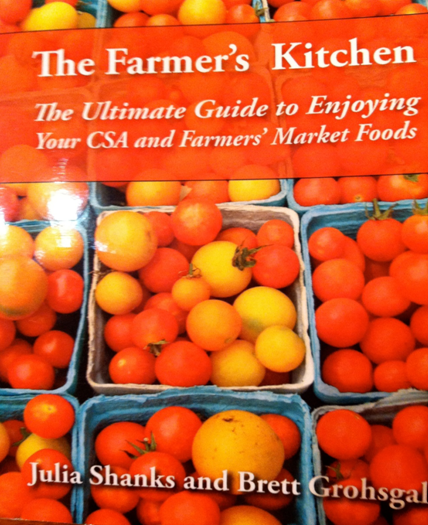
A friend told me about the book The Farmer’s Kitchen by Julia Shanks and Brett Grohsgal. at the beginning of the season and I found it had some really helpful and practical advice on food storage, plus there are lots of recipes:


Do some pre-cooking and freezing


Grill or pre cook for storage and later use. For me, this was probably the step that took the most discipline, but I got better at it and it was definitely the step that is the biggest help in putting together quick weeknight dinners. It works especially well with eggplant, squash and zucchini. I should say up front that I really love to cook, but in the summertime quick and easy is always best; no one wants to heat up a kitchen on a hot summer day and there are almost always other summer activities beckoning outside. In the fall, this step makes dinner way easier on a busy work and school night.


Eggplant Prep: 

  1.  Wash and dry eggplants. 
  2.  Slice off the stem end and then slice the eggplant into ¼” thin slices the long way.
  3.  Lay the slices in a single layer on clean towels. 
  4.  Lightly salt both sides of the eggplant. 
  5.  Allow them to sit for an hour or so until you see beads of water on the eggplant.
  6.  Pat the slices dry.
  7.  Now rub both sides of the slices with a bit of olive oil and then grill them either on an outdoor grill or on a stove top until they have some nice grill marks on them, but are still firm.
  8. Allow the slices to cool on a plate.  
  9. Then layer them into a storage container and keep in the fridge until ready to use later in the week.  (I've kept them for two weeks and they were still fine, just saying)

Yum!

-  -  -

For another great recipe, check out Susan's Kohlrabi Chips! Also found in her previous post. For more awesome recipes, check out the Oxfam America Pinterest Site.

What are your favorite recipes? What would you bring to a GROW themed potluck? Send your recipes, stories, and meal ideas to actioncorps@oxfamamerica.org and see them posted here!

And don't forget to sign up to host your own World Food Day dinner!


Tuesday, September 18, 2012

The Happiest Day of the Week!

By Susan Tamoney


Our latest guest blogger, Susan Tamoney, is an active member of the Boston Oxfam Action Corps as well as a member of a local CSA! In the following series of posts, Sue will share a look at the rich variety of local options and how she has chosen to play a larger part in her own food. Below, Susan shares her tips and tricks to following the GROW Method with her CSA produce, not to mention some delicious recipes with some unlikely vegetables.

-   -   -   


For me, the happiest day of the week is Tuesday. This is the day that I pick up our CSA share at Land’s Sake Farm. For anyone who doesn’t know, purchasing a Community Supported Agriculture (CSA) share allows small scale farmers to plan their growing season more efficiently by having shareholders pay for their entire season of produce up front, in advance of the growing season. Supporting and connecting with local farmers is one important part of Oxfam America’s GROW Method initiative in support of the GROW campaign.

But back to my happiest day of the week. It wasn’t always this way. Don’t misunderstand; it’s easy to look forward to going to the farm to pick up your CSA. The beautifully organized tables with baskets of produce spilling over their edges. The just harvested vegetables, practically crying out for their moment in the spotlight, begging to be photographed. The sunburned, enthusiastic farmers, proudly explaining what produce is in our share this week. The friendly neighbors exchanging recipes and making cooking suggestions. What’s not to love?


All of this against a backdrop of neatly tended rows of vegetables and colorful fields of flowers is pretty hard to resist. Toss in a bit of happy background noise as children, arriving with their parents, take off laughing to check out a fluffy farm rabbit and some elegant chickens clucking softly in their coop. What’s not to love?


Like many, we’ve always done a bit of backyard gardening at our house. The easy stuff: tomatoes, peas, a bit of bib lettuce, some basil. It was enough to toss together an impromptu Insalata Caprese. We’ve always sought out produce from small local farms and farmer’s markets. But this year, inspired by Oxfam and GROW, we decided that it was time to step up and commit to a CSA share all our own.
So, here’s a picture of our share for one week:


Looks like a good amount of produce for a two to four person family, right? Surprisingly, I found that there was a bit of stress involved. When I first start buying produce this way, I felt a bit overwhelmed by what I brought home in my bags, which can vary greatly for week to week. The good news is that with a bit of advance preparation and a tiny bit of practice, it was all very doable.

Be advised, if you, like me, have ever felt guilty at having to pitch into the compost (or even worse, into the trash) a head of lettuce that wilted before it made it into your salad or the zucchini that was in the back of the vegetable drawer and is now beyond salvation, even for soup, this feeling of guilt will be even worse when something from a CSA ends up in the bin. Not sure exactly why, but it definitely is. Maybe it’s picturing the sweat streaked faces of your farmers, all of whom you are on a first name basis with by the middle of the summer.

So, I decided early on in the season to make a kind of challenge of it.

The challenge:
  • Use only what we get in our share, no running out to Whole Foods to buy what we might “feel” like having for dinner tonight, 
  • Use everything in the share, even the things that we don’t have a clue what they are (“Oh, so that’s a kohlrabi.”), 
  • If we absolutely can’t eat something, share it with friends or neighbors.

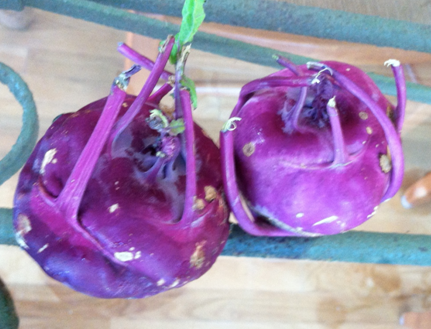
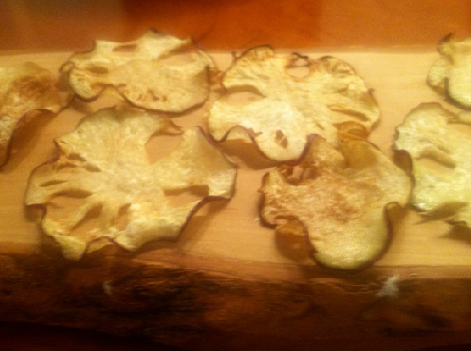
These are kohlrabi. I’ve already removed the leaves. Aren’t they a beautiful color? They transform into beautiful chips with a purpled ruffled edge, very Prada!

The great news is that we did it! And not only that but I can say with complete honesty that we have never eaten better than we did this summer. We had some truly amazing meals, and they were all simple and delicious and healthy and VERY easy to prepare. It took a bit of experimentation and “tweeking”, but by end of the season, I’d finally got it down. Supporting lots of parts of the GROW Method in the process and eating some amazingly delicious food. Now that REALLY makes me happy!


Kohlrabi Chip Recipe:


  1. Wash and dry one or two kohlrabi. 
  2. Thinly slice them into discs using a mandolin (careful of your fingers!). 
  3.  Put the slices into a bowl and toss them lightly with a little olive oil, just to coat. 
  4.  Place them in a single layer on parchment (very important) covered cookie sheets and bake in a 425F oven for about 5 minutes. You should keep an eye on them. Keep them in longer if you like them crispier.
I made these a lot this summer because they are great to serve as a little nibble before dinner or on the side with an entrée and because everyone loved them. So, I hit on a sweet and salty version that I liked even better:
  1. After tossing the kohlrabi slices with olive oil, sprinkle them with some coarse salt, some ground cinnamon and a bit of granulated sugar. 
  2.  Keep a close eye on them while they’re in the oven, they can burn quickly with the added bit of sugar.


Hope you like these as much as we all did! Kohlrabi got the prize in our house for “Vegetable That We Never Would Have Tried Without A CSA” and now it’s a hands down favorite!


-   -   -

Susan introduced us to what her CSA looks like and what her challenges were in using up all of her delicious produce!  Next she'll reveal her best tips and tricks for getting the most out of a CSA!  And of course more great recipes!


Have your own tips and tricks? What about favorite recipes for our lesser - known veggies? Email them in to actioncorps@oxfamamerica.org!