Friday, March 29, 2013


Pressure is on Mondelez to stand with women farmers


Yesterday Oxfam Action Corps and staff - joined by the Easter bunny - delivered Easter eggs filled with signatures from more than 67,000 petitions to Mondelēz International headquarters near Chicago, and offices outside of Seattle and New York City.


In a week that will see seventy-one million pounds of chocolate sold for Easter, Oxfam is accelerating its campaign targeting the world’s biggest buyer of cocoa, Mondelēz International, to address unequal pay, poverty and hunger that women farmers who supply cocoa for their products experience.


We also made it on TV! Sorry for the less than stellar quality, but still something to celebrate! ABC Chicago came out to Deerfield, IL to speak with the Action Corps and ended up showing a 20 second segment.


You can help by spreading the word to friends:

- By Twitter:  Love #Easter chocolate? Go #BehindTheBrands & tell chocolate co #Mondelez: respect women cocoa farmers! http://bit.ly/WWb80n 

- By FacebookDo you love chocolate?  This Easter, Americans will spend more than $2 billion on candy. Yet most women cocoa farmers earn less than $2 a day. Tell chocolate giant Mondelez to follow Mars and Nestle, and respect women cocoa farmers! http://bit.ly/WWb80n    
                                                                                                                                           
Chocolate companies produce ninety million chocolate Easter bunnies every year. Mondelēz is the biggest global buyer of cocoa and wields immense influence over the chocolate industry and the lives of people who grow cocoa.

A recent investigation by Oxfam showed that some women in cocoa supply chains are paid less than half as much as their male counterparts, earning just 2-3 dollars a day for their labor. In one cocoa processing plant in Indonesia a worker told investigators that all of the women employees were fired after they demanded basic rights.

Thank you for spreading the word!


Tuesday, March 26, 2013

You spoke. Mars and Nestle listened.

More than 65,000 people sent messages asking companies to improve their policies and help women cocoa growers get a fair deal.
March 26th, 2013 | by Victoria Marzilli
March 26th, 2013 | by Victoria Marzill
Here’s a real treat for chocolate lovers: proof that no company is too big to listen to customers like you.
Exactly one month ago, Oxfam launched the Behind the Brands scorecard with a call for consumers to “change the way the food companies that make your favorite brands do business.” We kicked off the effort by asking you to take action in support of women cocoa farmers around the world, many of whom face poverty, low wages, and discrimination.
In an incredible response, more than 65,000 people sent messages asking companies to improve their policies and help women cocoa growers get a fair deal. Tens of thousands of you also tweeted, shared our messages on Facebook, and attended events around the country. (See some examples in the video below.)

Today, thanks to your efforts, two of the world’s biggest chocolate companies have shown they’re listening. Mars and Nestlé have agreed to do more to “know and show” how women are being treated in their cocoa supply chains, to commit to a plan of action, to work to sign on to the UN Women’s Empowerment Principles, and to work with industry organizations to address gender issues. (Learn more about their commitments here.) We’re encouraged by their commitments and the effects these  will ultimately have on the women who grow and pick the key ingredient in our favorite chocolate treats.
“Women cocoa farmers and consumers around the globe have made their voices heard,” said Alison Woodhead, manager for Oxfam’s Behind the Brands campaign. “Mars and Nestlé have taken important steps to show the farmers they rely on, their customers, and the rest of the food industry that they care about the conditions women face in their supply chains.”
Oxfam is looking forward to working with Mars and Nestlé to ensure that they keep their promises to women cocoa farmers. For now, help maintain the momentum by calling on another of the world’s biggest chocolate companies, Mondelez International (maker of products like Oreos), to follow suit. Add your voice today.

Thursday, March 7, 2013

Join your local Oxfam Action Corps and make a difference on International Women's Day

Across the country tomorrow, Action Corps teams will be campaigning publicly for Behind the Brands for the first time. In each of their cities, teams of volunteers will pass out hand-outs and obtain petition signatures to spread the word about women and cocoa. The more volunteers they have, the more successful the overall action will be. Click on each city to see its event listing, where you can RSVP and get more detailed information on location and times. We hope to see you out there!


Albuquerque

Austin 

Boston

Burlington 

Chicago 

Des Moines 

Indianapolis 

Kansas City

Madison: Meet at the State Street Mall at 11:00am

Minneapolis

San Francisco 

Seattle - rsvp separately

If you have any other questions email actioncorps@oxfamamerica.org !

WOMEN FARMERS AND CHOCOLATE


International Women's Day is tomorrow, in the meantime take a look at this fascinating post on the relationship between women and poverty from Oxfam Action Corps Albuquerque. Thank you Kalen!


Last night, running out the door, I grabbed a chocolate bar. Ah, instant satisfaction. Chocolate is the solution to a sweet tooth, bad breakup, cake to celebrate a birthday, and more. A box of chocolates even melts hearts all over the country each year on February 14. With Oxfam’s new Behind the Brands Campaign we’re looking at how our favorite companies play a huge part in influencing the food industry. On March 8 for International Women’s Day, we’ll even go a step further and focus on women farmers in the cocoa industry. It all comes down to how some of our favorite cocoa companies like Mars, Mondelez International, and Nestlé are treating the very people who play a central role in growing our chocolate- the farmers.
Women farmers make up the majority of farmers, yet women working in cocoa fields and processing plants suffer substantial discrimination and inequality. Women play an indispensable role in the production of cocoa; they plant and care for young trees, break harvested pods, and are responsible for fermenting and drying cocoa before it is sold to traders.
 
Here’s a surprising fact that shocked me: According to Oxfam, “Additionally, unlike other commodities like soy and tea which are typically grown on huge plantations, 90 percent of cocoa is grown by small-scale farmers who work 5 hectares or less of land.”2
 
And while women increasingly occupy positions of power in food and beverage company headquarters, women working in company supply chains in developing countries continue to be denied similar advances in wealth, status or opportunity. We also know, that despite a worldwide recession, food and beverage companies are enjoying unprecedented success in selling chocolate to consumers across the globe1 In a 100 billion dollar industry, most cocoa farmers make less than 2 dollars a day. 


So what do we do?
 
These “big brands” are called big for a reason. They have a great deal of influence on our supply chain, but consumers have just as much of a say in the process. After all, we’re the ones who buy the products. Looking at the history of Nestlé, consumers have helped transform business practices since the 1970’s (I’m specifically pointing to the baby milk issue).http://en.wikipedia.org/wiki/Nestl%C3%A9_boycott
 
Today, some 40 years later, consumers are taking action again. This time, you don’t even have to boycott your favorite brands. Signing with Oxfam makes your voice heard. We’re at 11939 signatures and by the time you finishing reading this, that number will have gone up. Those numbers reflect people who want to change business practices among the Big Brands. Those practices are reflected in Oxfam America’s score card on the top ten food companies. Issues like transparency, women, workers, farmers, and land were studied in-depth for 18 months. As companies change their policies, so will the score card. Corporations are responding and you can keep up-to-date on their changes: http://www.behindthebrands.org/en-us/scorecard

When I made the mad dash out the door with my chocolate, I hadn't given much thought to the farmer and many others who helped with the cultivation process. The idea that we are all interrelated isn’t a new one. Dr. Martin Luther King Jr. gives a beautiful sermon on the subject in 1967:
 
“Did you ever stop to think that you can't leave for your job in the morning without being dependent on most of the world? You get up in the morning and go to the bathroom and reach over for the sponge, and that's handed to you by a Pacific islander. You reach for a bar of soap, and that's given to you at the hands of a Frenchman. And then you go into the kitchen to drink your coffee for the morning, and that's poured into your cup by a South American. And maybe you want tea: that's poured into your cup by a Chinese. Or maybe you're desirous of having cocoa for breakfast, and that's poured into your cup by a West African. And then you reach over for your toast, and that's given to you at the hands of an English-speaking farmer, not to mention the baker. And before you finish eating breakfast in the morning, you've depended on more than half of the world. This is the way our universe is structured, this is its interrelated quality.”
 
Thinking and learning about where our food comes from can have a tremendous impact. Next time you indulge in a chocolate bar think about who’s growing it. Since you’ve gotten to the end of this post though, go a step further and sign with others from around the world and make your voice heard. Tell the top three chocolate companies that the women who grow and pick cocoa deserve better:http://www.behindthebrands.org/en-us


Oh, and if you’re in Albuquerque on Friday, March 8 we’ve got some suprises in store on how to celebrate International Women’s Day. Email newmexico@oxfamactioncorps.org for more information!  

Happy International Women's Day from New Mexico Oxfam Action Corps  
 
 
2 http://worldcocoafoundation.org/wp-content/uploads/Cocoa-Market-Update-as-of-3.20.2012.pdf

Note: some information in this article taken from Oxfam reports
 
 
--
By Kalen Olson

Wednesday, February 27, 2013

Campaign Launch Report

Yesterday's launch of Behind the Brands was a landmark achievement for the Oxfam Action Corps! February 26th was a major success for all of Oxfam America, and you helped make it happen. Here are some highlights of your hard work:

In total, yesterday Action Corps teams tweeted 183 times, posted to Facebook 35 times, received 71 likes, posted 5 blog entries and received 240 blog visits

Yesterday the entire site(including all affiliate versions) had 30K visits, 11.5K of which were from a U.S. audience. On average, each U.S. visitor viewed 5 pages on the site and spent 3 minutes.

Action Corps volunteers took action at Mondelez Headquarters in Deerfield Illinois


as well as at General Mills Headquarters in Minnesota! There they spoke with employees and spread local awareness of the shortcomings of these hometown businesses.

We received unprecedented media coverage for the launch of Behind the Brands, including articles by:


But we are juts getting started! To keep our momentum up we need to keep posting, keep tweeting and making sure as many unique people visit behindthebrands.org and sign the petition as possible. Also, be sure to sign up for Thunderclap! we need 1000 people pledged so that our message is posted on 1000 Facebook and Twitter accounts on March 8th. Keep sharing and keep spreading the word, you are part of some incredible work!


Tuesday, February 26, 2013

Behind the Brands Campaign Launch!


Today has been a whirlwind. After months of planning Oxfam America has gone public with the Behind the Brands campaign and scorecard, and it couldn't be more exciting.

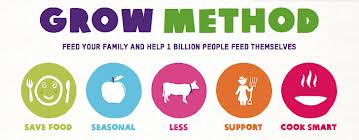
Oxfam’s GROW campaign aims to build a better food system: one that sustainably feeds a growing population (estimated to reach nine billion by 2050) and empowers poor people to earn a living, feed their families, and thrive. One of the ways in which we are taking action is holding companies and governments accountable for the impacts of their policies and practices on global food security. So Oxfam spent 18 months looking closely at how the top 10 food companies report that they do business. Then, we created an easy-to-use scorecard comparing and contrasting companies’ policies and commitments. We discovered that all 10 need to do a whole lot more to support farmers, communities, and our planet

You can help too, we're aiming for 1000 online hits todayEvery time you share the website on Facebook, email to a friend, or tweet using #BehindtheBrands you are helping spread the message that you are a powerful consumer and are demanding change. Some sample tweets and posts include:


  • The world’s largest food companies have a lot of power – but you have more. Tell them to do their part to fix the broken food system. http://bit.ly/ZcXnx0

  • The world produces enough food to feed everyone, yet one in eight still go hungry every day. We must hold the top food & beverage companies accountable for the impacts of their policies on global food security! Find out the truth behind the brands and take action at http://bit.ly/ZcXnx0

The Oxfam Action Corps has played an integral role already in publicizing Behind the Brands throughout the US. Throughout the day on February 26th Action Corps members raised awareness at the offices of 6 of the top 10 brands being targeted: Mondelez in Chicago, Pepsico in Purchase, NY, and General Mills in Minneapolis just to begin.


Actions are already proving powerful! Many of the companies targeted have already begun responding, here a couple of samples, from both ends of the spectrum: 

"We [Mars] look forward to strengthening our approach involving women in the community development process and continuing to ensure that women in cocoa communities are fully empowered to participate equally alongside the many other diverse groups in West African society."

"Kellogg’s is committed to working more closely with the farmers who grow our grains to drive improvements in sustainability and we have a zero tolerance policy against forced labour. Clearly the ratings in the Oxfam report show us we need do more and we will be reviewing them in detail"

But we are just getting started.

Connect with your local Action Corps to see how you can become a part of the solution. 
Let's go Behind the Brands!


for more information on the launch, click here

Monday, February 11, 2013

Happy New Year Oxfam Style

Thank you to our Albuquerque Action Corps for this great seasonal post on incorporating the GROW method into your New Year's resolution. It isn't too late!


By Guest Blogger Kathy Chavez 

Oxfam Action Corps Albuquerque
Sunday February 10 2013

Happy Lunar New Year! Today windows and doors are decorated with red to scare off bad fortune and gold to attract wealth.  Many Chinese families are eating fish and drinking alcohol to bring prosperity and longevity, since  , fish sounds like  , surplus and  jiǔ, alcohol sounds like jiǔ longevity.  With all these well wishes, we figure it’s a good time to re-visit our New Years’ resolutions.

Every year millions of people make resolutions with promises of sticking to them.  According to the University Journal of Psychology 38% of Americans make resolutions. The top 10 for 2013 are:

  1. Lose weight
  2. Get organized
  3. Spend  less and save more
  4. Enjoy life to the fullest
  5. Stay fit and healthy
  6. Learn something exciting
  7. Quit smoking
  8. Help others
  9. Fall in love
  10. Spend more time with family 
If any of your resolutions are on the top ten lists, implementing the Oxfam GROW method can make succeeding more probable. Forbes magazine states that by late January to the middle of February, 22% of resolutions will be dropped.  Having a plan and a support system will increase the probability of success and inspirational goals have a greater chance of being achieved.  Try using the Oxfam GROW method for support and inspiration. What’s more inspiring than a method that will help you achieve a healthier life while improving the food system worldwide? 


Lose weight, GROW style.  Start by adding more seasonal fruits to every meal.  Then try eating a little less dairy and meat at every meal or substitute a vegetarian meal once a week with Meatless Mondays. Cutting meat out of your diet even just one day a week can decrease your risk of heart disease by 19% according to a Harvard University study.  Instead, eat beans, lentils, and green, leafy vegetables for protein. Beans are less expensive than meat, so this change will tackle goal three on the list along with one and five. Also try starting No Fast Food Fridays. Cooking together and eating at home is sure to target goal ten of spending more time with family. 


Other simple ways to save money include eating at home more often and packing a lunch for yourself and your family members using leftovers. Cooking at home and eating less processed food is better for our bodies, our wallets, and the environment.   

Dr. David Pimentel at Cornell University explained that frozen dinners take twice the resources to produce than food cooked fresh at home. Seasonal and locally grown foods are also more flavorful and nutritious than those that are shipped from long distances. Still not convinced about the lower cost? Forbes magazine disproved the hype that it is cheaper to eat out.  Previous studies did not include drinks or tips, plus didn’t factor in that most people cook enough food for more than one meal at home. 

As for falling in love you might want to adopt a pet from you local shelter, or possibly meet your perfect match volunteering. You can learn new things and meet interesting people by volunteering with Oxfam.  

 If you are reading this and feel like you have already failed at your  New Years’ Resolution, don’t lose hope!  You have a second chance with today’s Lunar New Year. And in general, it’s never too late to shed the old and embrace the new. Hope this New Year finds you eating well, whether it’s eating seasonally, locally or cooking more at home.